Why STEM Builds Strong Problem-Solvers
Have you ever noticed how kids light up when they figure out a tricky puzzle or complete a hands-on project? That spark of excitement is more than just fun, it’s the brain learning how to solve problems. STEM activities, which focus on Science, Technology, Engineering, and Math, give students new ways to think creatively and tackle challenges. These skills don’t just stay in the classroom, they help kids through everyday life.
Studies show that when students actively engage in STEM projects, through hands-on experiments, group challenges, or interactive learning, it leads to real academic gains. In fact, an analysis of 225 studies found that failure rates dropped from 34% to 22%, and test scores rose about 6%, when active learning replaced traditional lectures.
Simple STEM activities, like building a tower from blocks or experimenting with water and ice, teach children to plan, test ideas and make adjustments. When a tower falls, they figure out why and try again. This process helps kids develop patience, critical thinking, and most importantly not giving up, all the skills needed to solve real world problems.
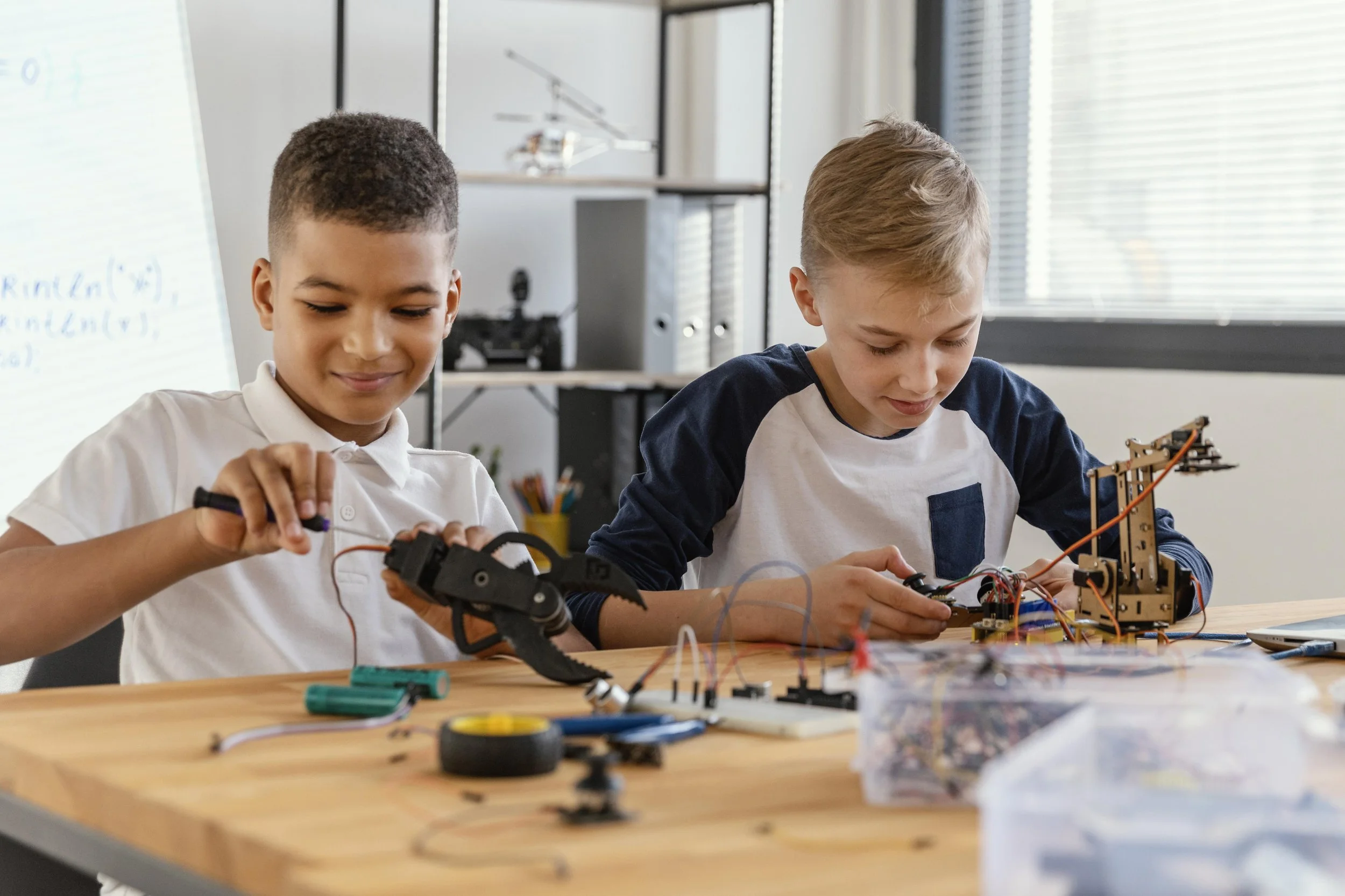
STEM doesn’t always need fancy tools or labs. Anything can turn into a mini science experiment. Children learn to observe results, make predictions, and change their plan. These small lessons build confidence and show that mistakes are just part of learning.
By turning curiosity into action, kids learn to approach challenges with creativity and confidence. These are skills that will benefit them long after the project is finished.